
Actor Adivi Sesh says ‘allowing women to work’ mindset is itself the problem at Hyderabad campaign
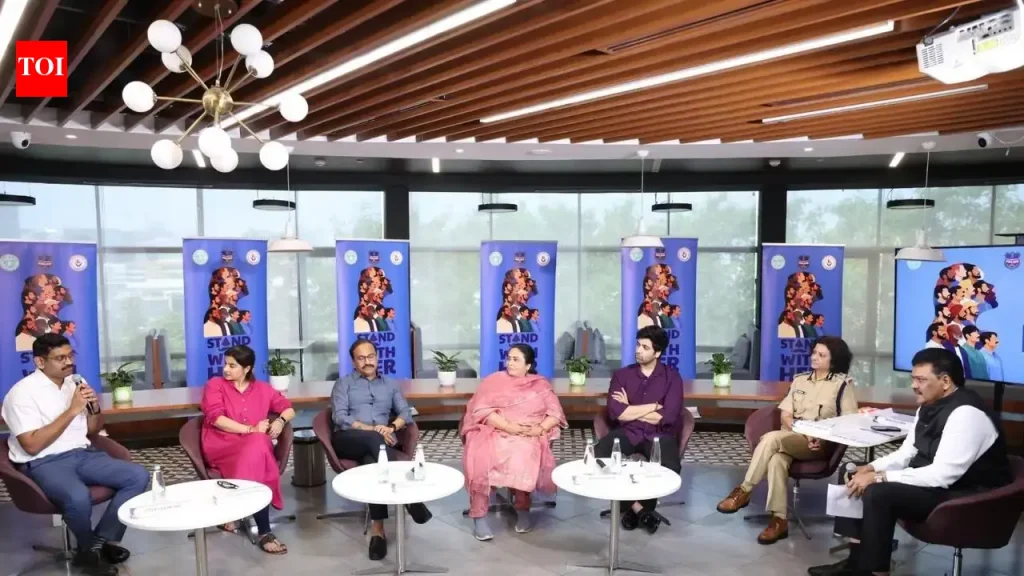
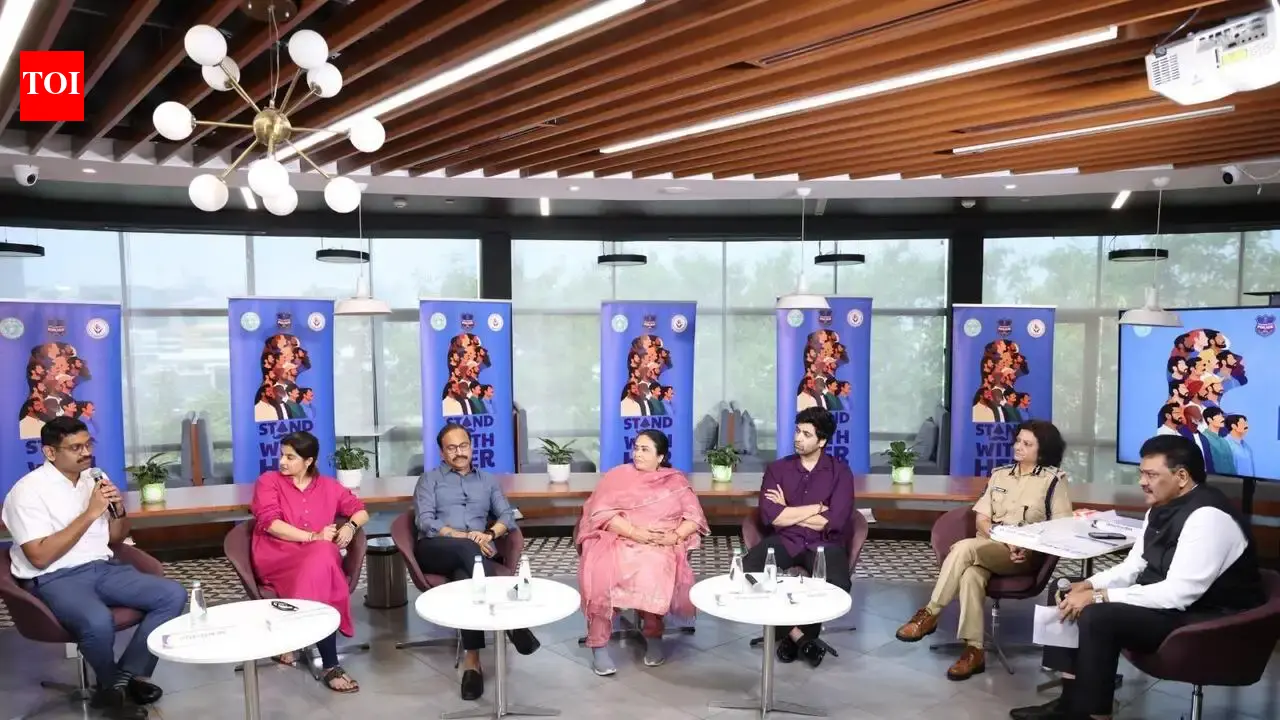
Actor, writer and director Adivi Sesh said the very idea that women are being ‘allowed’ to work is a fundamental part of the problem, speaking at the seventh edition of the ‘Stand With Her’ campaign in Hyderabad on Saturday. The event, organised by the Telangana Women’s Safety Wing, focused on ‘Inclusive Workspaces, Everyday Fairness and Voice’.
Sesh recalled instances on film sets where women were not allowed to sit on apple boxes because they were menstruating, and called for such practices to be discussed openly and normalised. He questioned whether workplaces and homes are designed for dual-income families, noting that women often continue to shoulder most of the domestic workload even while working outside.
“The fundamental idea that we are giving women permission to work is itself the problem,” Sesh said during the panel discussion.
Workplace exclusion often subtle, says Women Safety Wing chief
Women Safety Wing Director General Charu Sinha said workplace exclusion is often difficult to identify because it is subtle rather than dramatic. “The architecture of exclusion is inbuilt. We would like to make all this inequality visible today,” she said.
Recalling the early years of women in policing, Sinha said women officers were routinely kept away from tough postings and had to prove themselves all over again with every new assignment. “An equal workplace cannot just be announced, it has to be built up,” she added.
Choreographer Pony Verma Prakashraj spoke about being the only female choreographer competing with male colleagues when she started her career. She said she had to consciously choose how she dressed so people would take her seriously in meetings, and that marriage was once seen as something that would end her career.
Toxic masculinity can be unlearned, say experts
The second panel, titled ‘Anger, Ego and Toxic Masculinity’, examined how gender conditioning affects behaviour from childhood. Sinha said such conditioning is not permanent. “All these behaviours that men have learnt can be unlearned too, but with awareness,” she said, calling emotional openness and vulnerability essential to healthy masculinity.
Special Commissioner of Labour Pamela Satpathy said society operates on “default settings” that assign pride and valour to men while expecting women to be timid, graceful and beautiful. “Every responsibility is women’s, authority is man’s,” she said, urging people to pause during conflicts and ask whether the relationship or winning an argument is the priority.
Satpathy also pointed out that a man’s anger tends to be seen as authority, while an angry woman is judged very differently.
Anusha, project manager at the Centre for Development and Empowerment of Women under the Women’s Safety Wing, said taking time to cool off during an argument can be healthy but should not become silent treatment. “Taking time is a good thing, but we must also communicate, otherwise the other person feels neglected,” she said.
Datos clave
| Element | Details |
|---|---|
| Event | Seventh edition of ‘Stand With Her’ campaign |
| Location | Hyderabad |
| Organiser | Telangana Women’s Safety Wing |
| Theme | Inclusive Workspaces, Everyday Fairness and Voice |
Why this matters for Hyderabad readers
The campaign brings together voices from film, policing, labour and gender advocacy to address issues that affect women in Hyderabad’s workplaces, from corporate offices to film sets and government departments. The discussion around subtle exclusion and toxic masculinity has direct relevance for the city’s growing workforce, where dual-income households are increasingly common but workplace policies and home responsibilities often lag behind.
Source: Times of India – Hyderabad. https://timesofindia.indiatimes.com/city/hyderabad/idea-that-were-allowing-women-to-work-is-itself-part-of-the-problem-says-adivi-sesh/articleshow/134509016.cms